

Lawn Renovation
Lawn Renovation Pricing
Revive Your Lawn – Professional Lawn Reset Service
(Best results when performed in late summer or early fall)
What Our Renovation Includes
- Lawn reset using professional glyphosate treatment
- Core aeration to relieve soil compaction
- Premium Athletic Blue Rye seed installation
- Starter fertilizer for strong germination
- Compost topdressing for soil improvement
- Follow-up inspection visit
- Our renovation process restores lawns that have been taken over by bentgrass, weeds, or thinning turf.
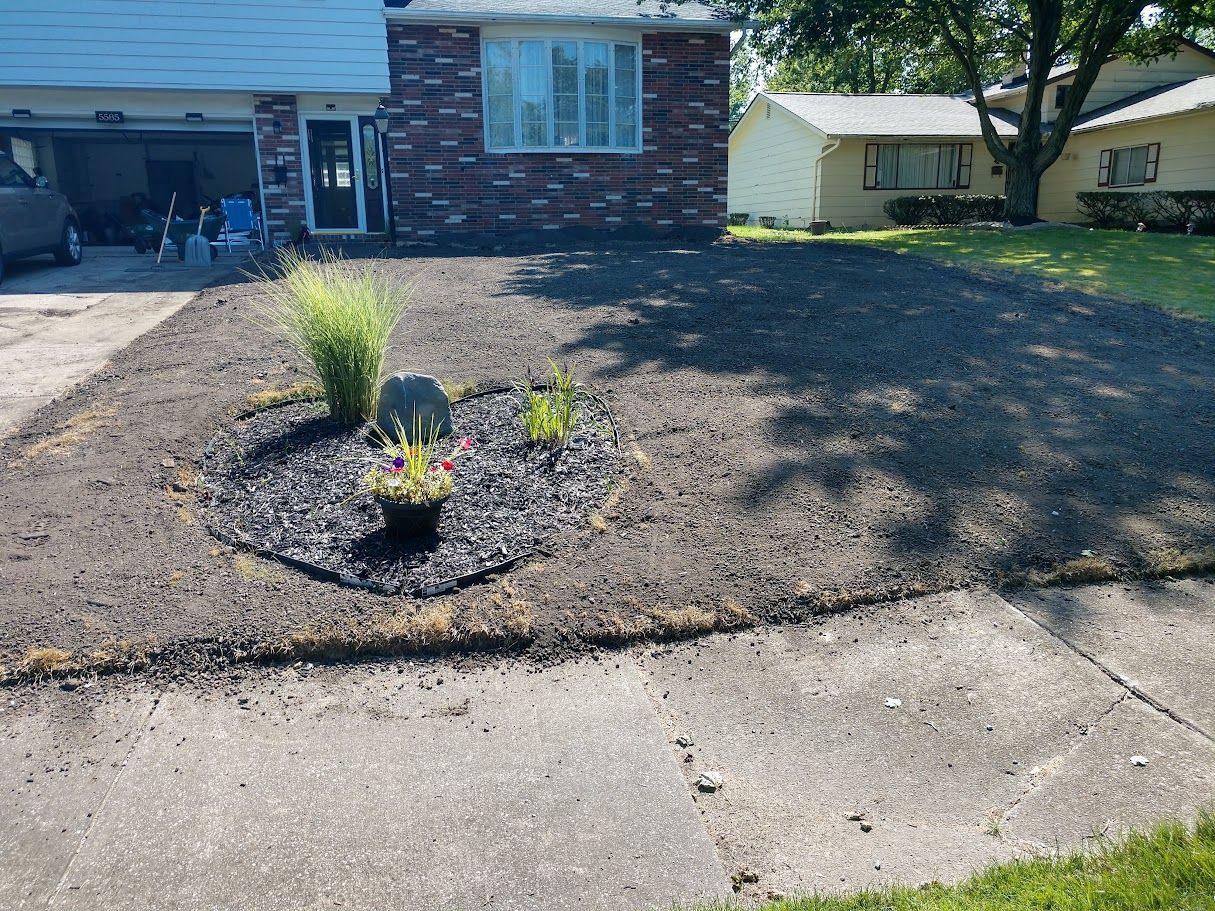
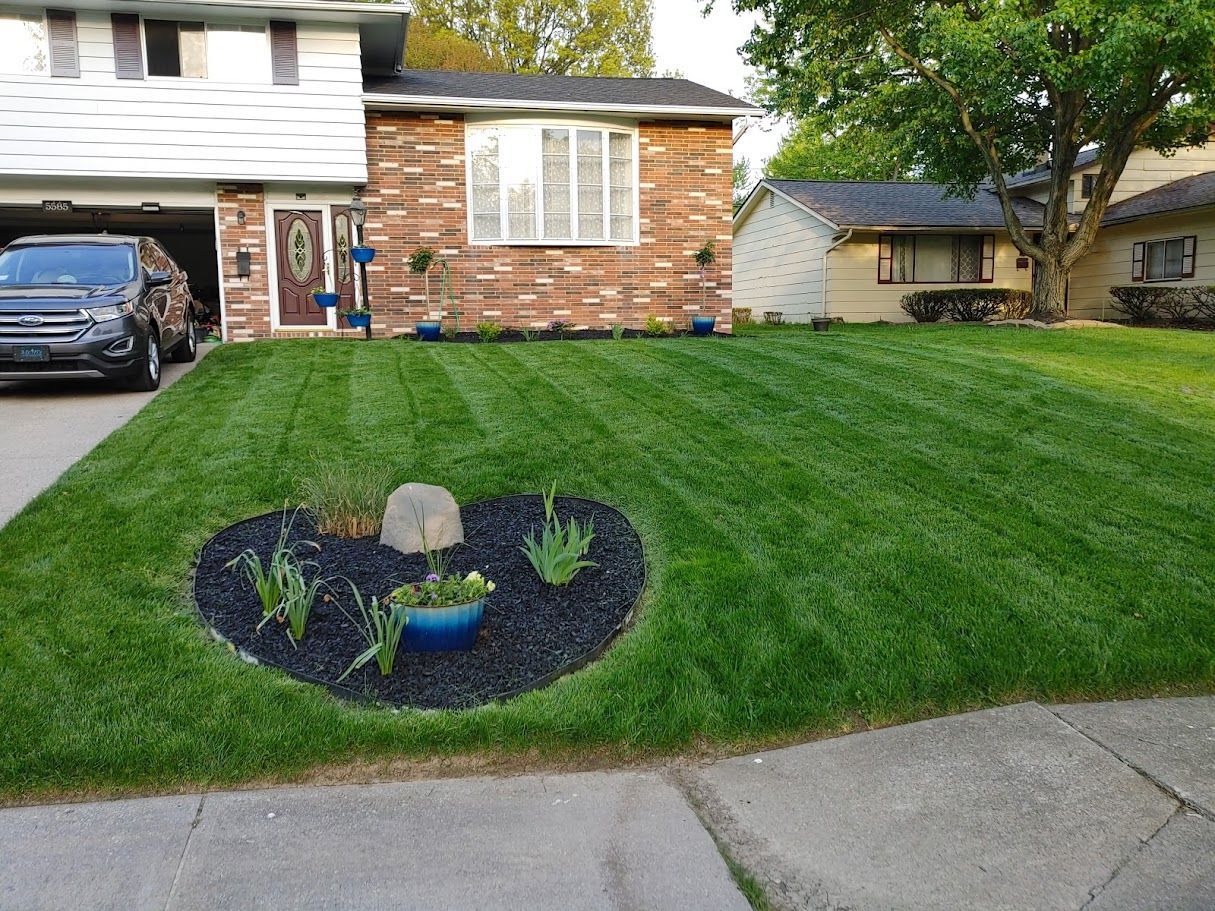
Lawn Renovation Process
A lawn renovation rebuilds a damaged lawn from the ground up by removing poor-quality turf and establishing new, healthy grass. The process is designed to improve soil conditions, establish strong roots, and create a thick, healthy lawn.
1. Lawn Evaluation
The first step is determining whether renovation is necessary. This includes evaluating:
- Percentage of undesirable grass (such as bentgrass)
- Weed pressure
- Soil compaction
- Overall turf health
If more than about 40–50% of the lawn is undesirable grass or weeds, renovation is often the best solution
2. Kill Existing Grass (if needed)
When invasive grasses like bentgrass dominate the lawn, the existing turf must be removed.
- Method A – Glyphosate Application (Fast Method)
Apply a non-selective herbicide such as glyphosate to kill existing grass and weeds.
Wait about 7–10 days for full plant death before moving to the next step. - Method B – Selective Suppression (Slow Method)
Products such as Tenacity can weaken and suppress bentgrass over multiple treatments.
This method preserves desirable turf but takes longer and may require multiple applications.
3. Lawn Preparation
Once the existing grass is removed or suppressed, the lawn must be prepared for seed.
Preparation typically includes:
- Scalping or mowing very low
- Removing debris or thatch
- Light dethatching or power raking if necessary
This exposes the soil surface and allows seed to make good contact with soil.
4. Core Aeration
Core aeration is performed to:
- Relieve soil compaction
- Improve water and nutrient movement
- Create holes where seed can settle
Aeration also improves seed-to-soil contact, which is critical for germination.
5. Overseeding or Reseeding
New grass seed is applied across the lawn using high-quality turfgrass blends.
Typical seeding rates:
- Overseeding: about half the full establishment rate
- Full renovation: full establishment rate
For example:
- Perennial Ryegrass blends: 4–5 lbs per 1,000 sq ft
- Tall fescue blends: 6–8 lbs per 1,000 sq ft
Using improved seed varieties leads to a thicker, healthier lawn.
6. Topdressing (Optional but Recommended)
A light layer of compost or soil is spread over the lawn to:
- Protect seed
- Improve soil structure
- Increase moisture retention
- Enhance germination
This step significantly improves seed success rates.
7. Starter Fertilizer Application
A starter fertilizer is applied immediately after seeding to promote strong root development and early growth.
Starter fertilizers contain:
- Nitrogen (N) for growth
- Phosphorus (P) for root development
- Potassium (K) for overall plant health
8. Watering and Establishment
Watering is critical during the first few weeks.
Recommended watering schedule:
- Light watering 1–3 times per day during germination
- Keep the soil consistently moist but not saturated
- After germination, gradually reduce watering frequency and increase depth.
9. Follow-Up Visit
A follow-up inspection is often performed to:
- Check germination success
- Identify any thin areas
- Apply additional fertilizer if needed
- Provide mowing and maintenance recommendations
10. Ongoing Maintenance
New lawns require proper maintenance to reach their full potential.
This includes:
- Regular fertilization
- Proper mowing height
- Weed control
- Soil health improvements
Typical Timeline
| Stage | Timeframe |
|---|---|
| Herbicide application | Day 1 |
| Grass die-off | 7–10 days |
| Aeration & seeding | Day 10–14 |
| Germination | 7–21 days |
| First mowing | 3–4 weeks |
| Lawn establishment | 6–8 weeks |
Final Result
After a successful renovation, the lawn will have:
- Thicker turf density
- Healthier root systems
- Improved color and uniformity
- Better resistance to weeds and disease
Lawn Renovation Pricing
| Lawn Size | Price |
|---|---|
| 4,000 sq ft | $1,100 |
| 5,000 sq ft | $1,375 |
| 6,000 sq ft | $1,650 |
| 7,000 sq ft | $1,925 |
| 8,000 sq ft | $2,200 |
| 9,000 sq ft | $2,475 |
| 10,000 sq ft | $2,750 |
| 12,000 sq ft | $3,300 |
| 14,000 sq ft | $3,850 |
| 16,000 sq ft | $4,400 |
| 18,000 sq ft | $4,950 |
| 20,000 sq ft | $5,500 |
Large Property Renovations
| Lawn Size | Price |
|---|---|
| 30,000 sq ft | $8,250 |
| 40,000 sq ft | $11,000 |
| 1 Acre (43,560 sq ft) | $11,980 |
Optional Lawn Upgrade Packages
Soil Health Booster
Improves root growth and soil biology
Includes:
- Bio-stimulants
- Root growth enhancer
- Soil conditioner
Add $35 – $55 per 1,000 sq ft
Premium Seed Upgrade
Upgrade to premium Kentucky Bluegrass
Or Premium Tall Turf Type Fescue
Add $40 – $75 per 1,000 sq ft

Why Renovate Your Lawn?
Renovating a lawn means completely restoring it when the existing turf is too damaged or overrun by undesirable grass species (such as bentgrass) to recover through normal treatments. Instead of trying to repair a weak lawn year after year, renovation gives you the chance to rebuild a healthy, thick turf from the ground up.
1. Eliminate Problem Grasses and Weeds
Some lawns become dominated by invasive grasses like bentgrass, nimblewill, or heavy weed populations. These grasses spread aggressively and crowd out desirable turf varieties. Renovation allows you to remove these unwanted plants and replace them with improved turfgrass varieties that perform better in your climate.
2. Restore Lawn Density
Thin lawns allow weeds to move in easily. Renovation reseeds the lawn at proper establishment rates, creating a thick turf canopy that naturally suppresses weeds and improves the lawn’s overall appearance.
3. Improve Lawn Health
Over time, lawns can suffer from soil compaction, poor soil biology, and nutrient imbalances. Renovation typically includes core aeration, soil amendments, and starter fertilizer to rebuild a healthier root zone and encourage deeper roots.
4. Upgrade to Better Grass Varieties
Modern seed varieties have better disease resistance, drought tolerance, color, and durability. Renovation lets you introduce elite turfgrass cultivars that produce a stronger and more attractive lawn.
5. Increase Property Value and Curb Appeal
A dense, green lawn dramatically improves the appearance of a property. Whether for personal enjoyment or resale value, a professionally renovated lawn can transform the look of the entire landscape.
6. Fix Lawns That Haven’t Responded to Regular Treatments
If a lawn has received fertilization and weed control but still looks poor year after year, renovation may be the most cost-effective long-term solution. Instead of spending money trying to correct a failing lawn, renovation resets the lawn with a fresh start.
Simple Summary
A lawn renovation removes poor-quality grass and replaces it with stronger, healthier turf while improving the soil and root environment. The result is a thicker, greener lawn that is easier to maintain and more resistant to weeds, pests, and disease.
Schedule Your Lawn Renovation
Still Not Sure Which Level Is Right?
We evaluate your lawn and recommend the right level based on need, not upselling.
Free Lawn Evaluation Available